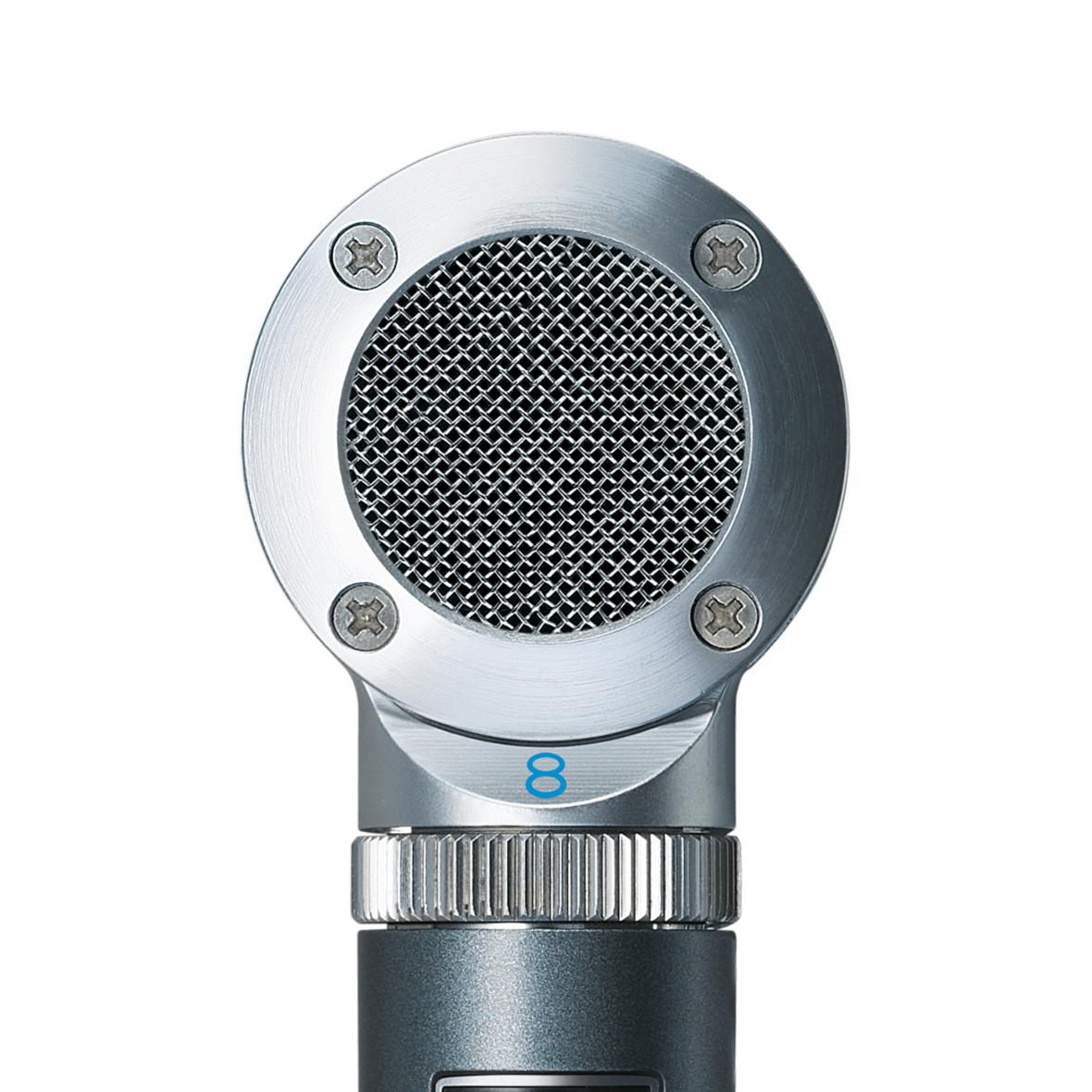
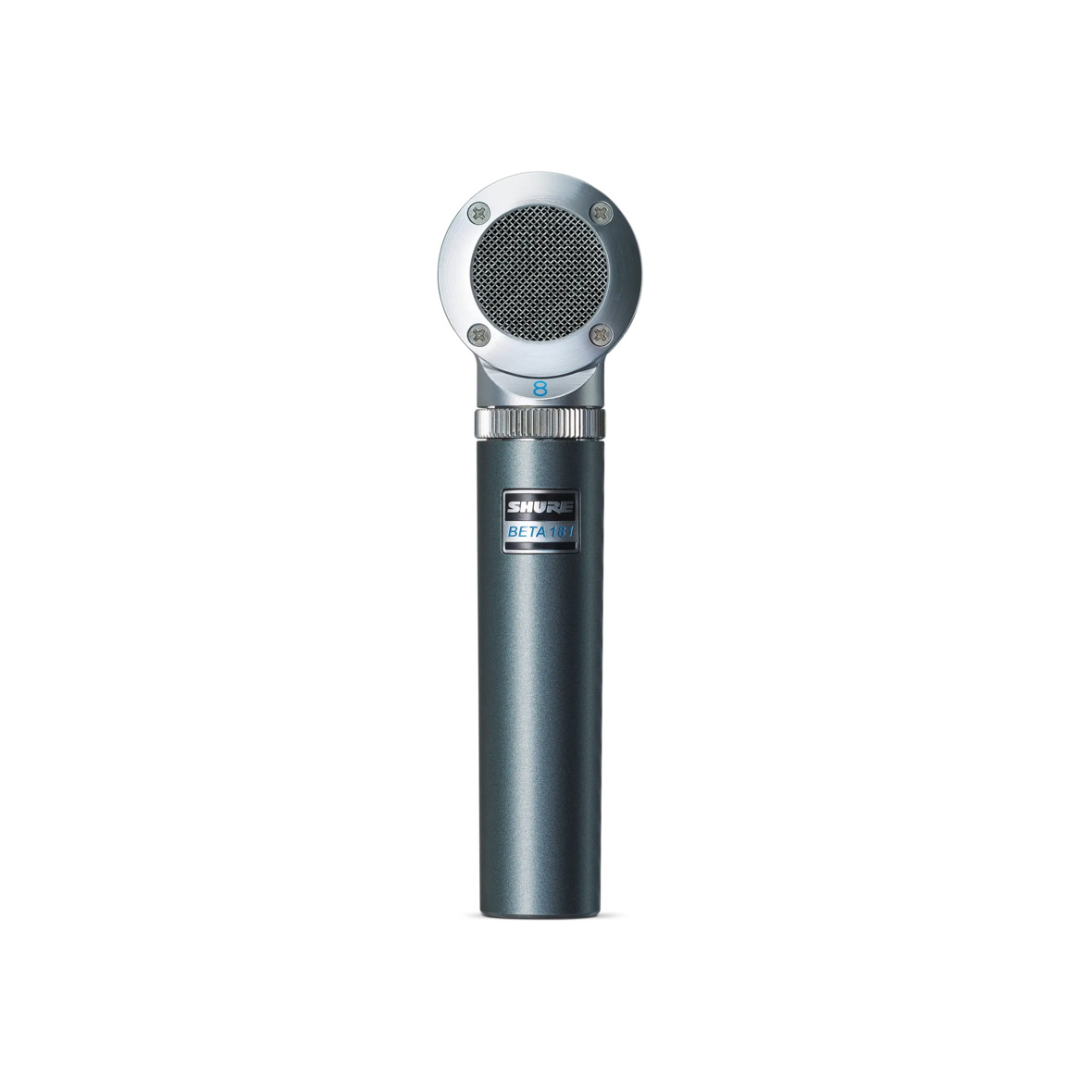
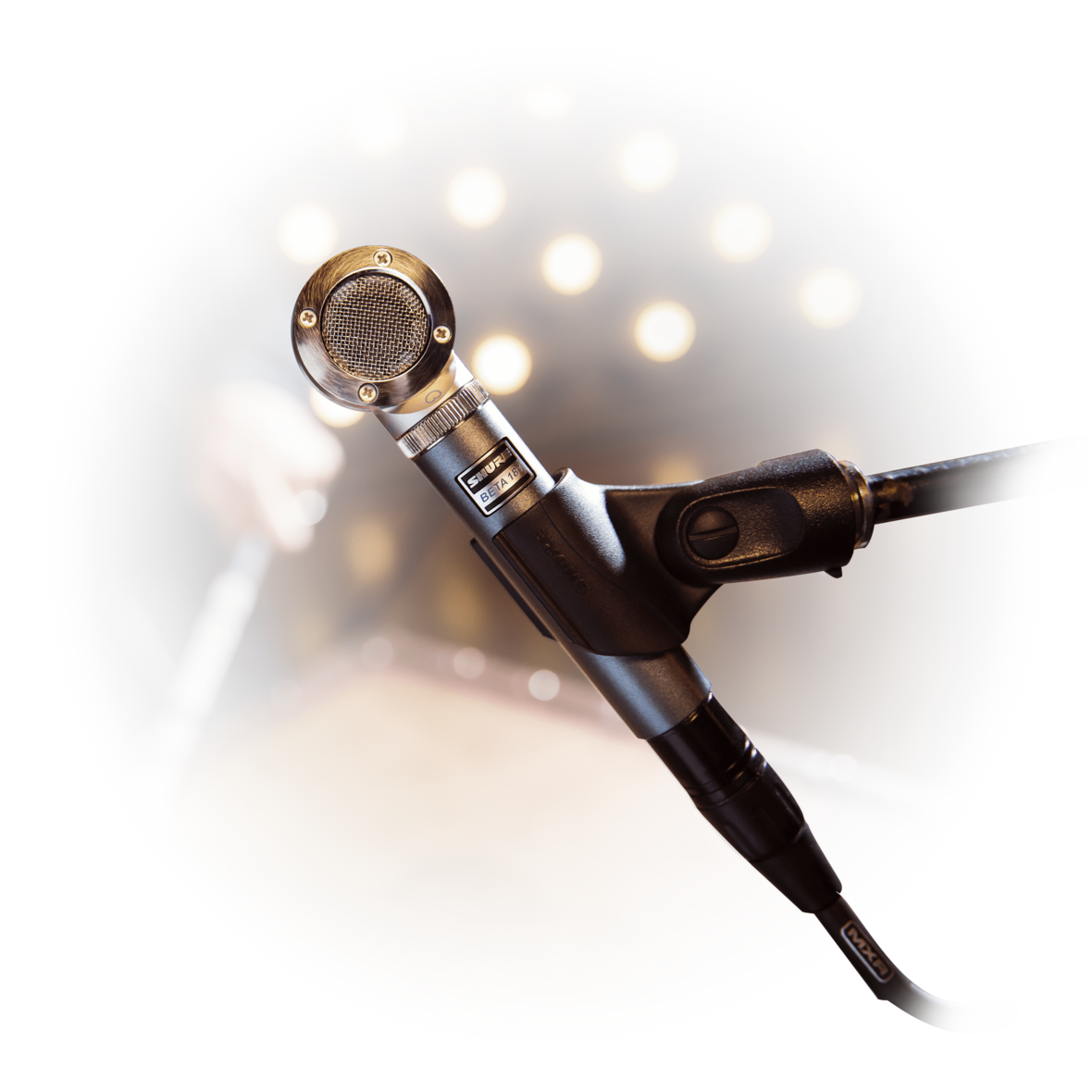
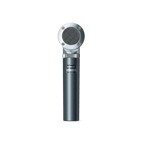
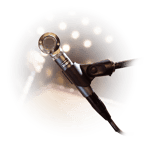
Beta 181 Side-Address Condenser Microphone with interchangeable capsules
Best suited to:
Hihat, Overhead,
Acoustic Guitar,
Choir
Also great for:
Further acoust. instr.,
Electric Guitar
- Description
- Features
- Specs
- Downloads
What is the Beta 181 best suited to?
This Beta 181 is a multipurpose instrument microphone and can be used on a wide variety of applications including guitars, bass and drums (overheads and snares). A total of four different capsules (Cardioid, Super CardioidPicks up most sound in front of the microphone and some from the sides. It is less susceptible to feedback in high volume environments.
Read moreGo to the glossary, Bi-directional, Omni-directional) are available meaning that they can be interchanged according to application.
What are the product codes for the additional capsules?
The RPM181/C is a cardioidPicks up most sound in front of the microphone and some from the sides. It is less susceptible to feedback in high volume environments.
Read moreGo to the glossary condenserCondenser microphones are more sensitive, give a smooth, natural sound and need to be powered.
Read moreGo to the glossary capsule for the Beta 181. The RPM181/S is a super cardioidPicks up most sound in front of the microphone and some from the sides. It is less susceptible to feedback in high volume environments.
Read moreGo to the glossary condenserCondenser microphones are more sensitive, give a smooth, natural sound and need to be powered.
Read moreGo to the glossary capsule for the Beta 181. The RPM181/BI is a bi-directional condenserCondenser microphones are more sensitive, give a smooth, natural sound and need to be powered.
Read moreGo to the glossary capsule for the Beta 181. The RPM181/O is a omni directional condenserCondenser microphones are more sensitive, give a smooth, natural sound and need to be powered.
Read moreGo to the glossary capsule for the Beta 181.
What might I use the interchangable capsules for?
The cardioidPicks up most sound in front of the microphone and some from the sides. It is less susceptible to feedback in high volume environments.
Read moreGo to the glossary capsule is best suited to overheads, piano and acoustic instruments. You can also use the cardioidPicks up most sound in front of the microphone and some from the sides. It is less susceptible to feedback in high volume environments.
Read moreGo to the glossary capsule for M/S stereo micing (in conjunction with another microphone with a bi-directional capsule). The supercardioidPicks up most sound in front of the microphone and very little from the sides, making it more directional than a cardioid mic.
Read moreGo to the glossary capsule is best suited to snare, toms, acoustic instruments and other forms of close distance micing. The omni-directional capsule could be used for choirs, orchestras and ambient recording applications. Lastly, the Bi-directional capsule can be used for mono overheads, or for the recording of two instruments simultaneously on one channel.
- Interchangeable polar pattern"Polar pattern" describes how well the microphone “hears“ sound from different directions.
Read moreGo to the glossary capsules for the ultimate in low-profile application flexibility (each Beta 181 ships with one polar pattern"Polar pattern" describes how well the microphone “hears“ sound from different directions.
Read moreGo to the glossary capsule and one XLR preamplifier) - Precision-engineered, compact side-address design features innovative locking ring to provide secure connection between capsule and preamplifier
- Capsules available separately for custom flexibility
- Frequency responseThis is the range of frequencies, from the lowest to the highest, that a mic can pick up.
Read moreGo to the glossary tailored for wide dynamic rangeThis is the difference between the queitest and loudest sound that a mic can pick up.
Read moreGo to the glossary applications for use in high SPL environments - Available in the following polar pattern"Polar pattern" describes how well the microphone “hears“ sound from different directions.
Read moreGo to the glossary options: - Beta 181/C (cardioid) for drum overhead, piano, acoustic instrument applications, M/S stereo technique (paired with Beta 181/BI)
- Beta 181/S (supercardioid) for snare drum, acoustic instrument, close-miking applications
- Beta 181/O (omnidirectional) for ambient/room, instrument ensemble applications
- Beta 181/BI (bidirectional) for mono drum overhead, dual instrument sound source applications, Blumlein stereo technique (pair of Beta 181/BI)
- Transducer TypeA transducer converts sound into an electrical signal. The two most common types are dynamic and condenser.
Read moreGo to the glossary : CondenserCondenser microphones are more sensitive, give a smooth, natural sound and need to be powered.
Read moreGo to the glossary - Polar Pattern"Polar pattern" describes how well the microphone “hears“ sound from different directions.
Read moreGo to the glossary: SupercardioidPicks up most sound in front of the microphone and very little from the sides, making it more directional than a cardioid mic.
Read moreGo to the glossary, OmnidirectionalEqually sensitive to sound from all directions, but cannot be "aimed" to isolate one area.
Read moreGo to the glossary, CardioidPicks up most sound in front of the microphone and some from the sides. It is less susceptible to feedback in high volume environments.
Read moreGo to the glossary, BidirectionalPicks up sound equally from in front and behnd the microphone.
Read moreGo to the glossary -
SensitivityThis is how mich signal a microphone produces for a given amount of sound.
Read moreGo to the glossary (1 kHz):
Cardioid -48,5 dBV/Pa; Supercardioid -49,5 dBV/Pa; Omnidirectional: -52,0 dBV/Pa; Bidirectional: -51,0 dBV/Pa
- Equivalent Selfnoise:
- Cardioid: 20 dB(A)
- Supercardioid: 22 dB(A)
- Omnidirectional: 23 dB(A)
- Bidirectional: 23 dB(A)
- Sound Pressure:
- Cardioid: 151 dB
- Supercardioid: 154 dB
- Omnidirectional: 157 dB
- Bidirectional: 156 dB